Studio News
Running: The Motion That Started Motion Pictures
Date:
January 18, 2025
…and how cinematography captures its emotion.
There is something magical about running.
Up close, it captures strong emotions in each step. Not surprisingly, for all animals, including humans, running can be the difference between life and death. For most early humans, if you wanted to eat meat, you had to hunt for it, which meant running fast enough to catch it yourself. As well, if you wanted to escape being eaten, you had to run away as fast as possible!
There is a strong connection between running and cinema: in fact, it contributed to its very creation.
How Running Created the First Motion Picture
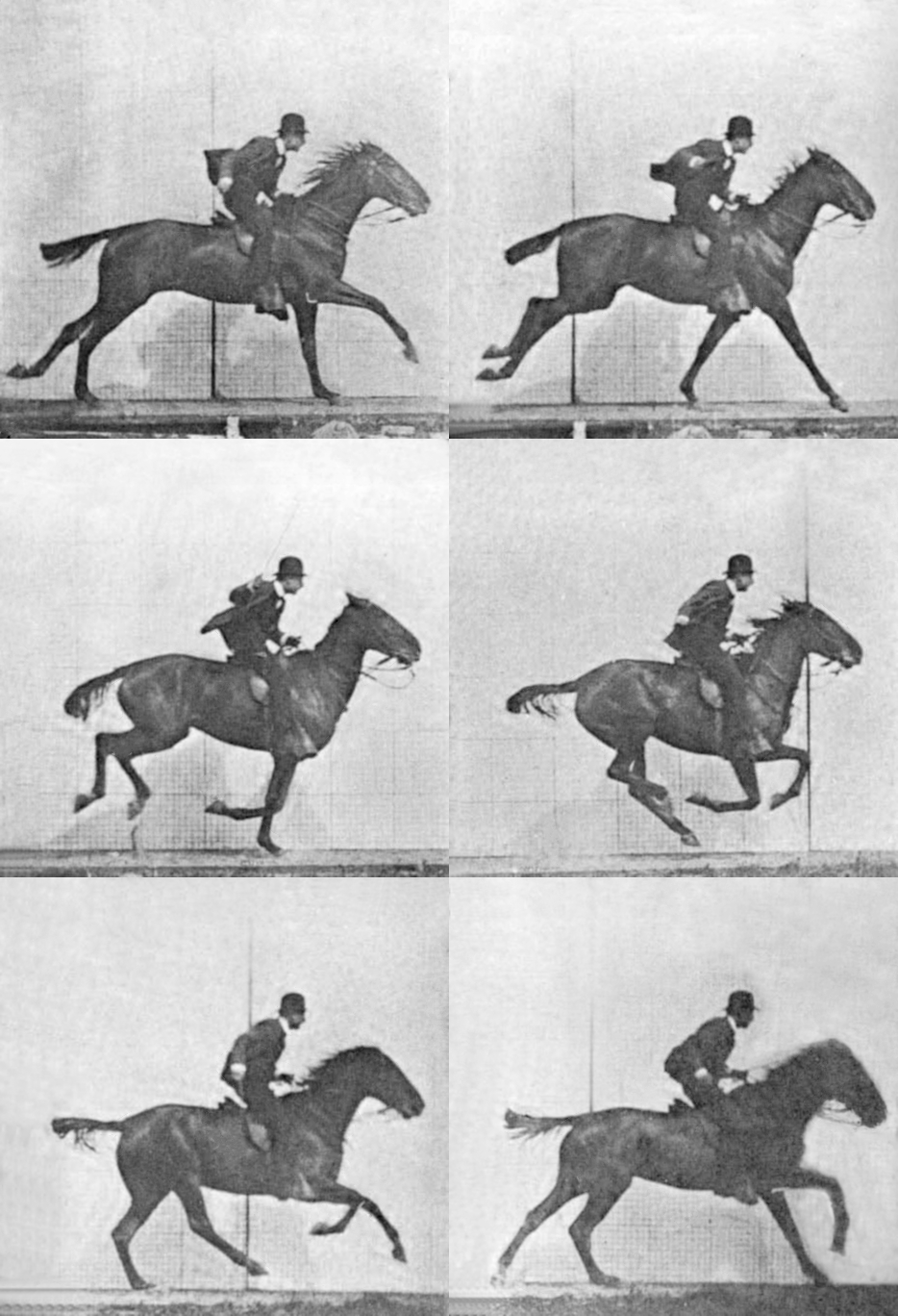
In 1878, Scientific American published a series of pictures depicting a horse in full gallop. Pioneering English photographer Eadweard Muybridge took the photos to settle a bet between businessman Leland Stanford and his colleagues. Stanford contended that all four hooves were off the ground at some point in a horse’s stride. His colleague thought this was impossible. Stanford had Muybridge take photographs of the positions of a horse’s hooves in rapid succession. The 12 pictures not only showed that Stanford had won the bet but became the first recording of a movement sequence and the first step in transforming photography into motion pictures – the cinema magic began.
Why Running Scenes Work
When I think of running and cinema, a few exciting movie scenes immediately spring to mind: someone chasing, being chased, following a desire, or perhaps escaping the inevitable. When they are captured right, we watch these scenes with flushed faces, feeling like we’re running together with the character(s) in the scene.
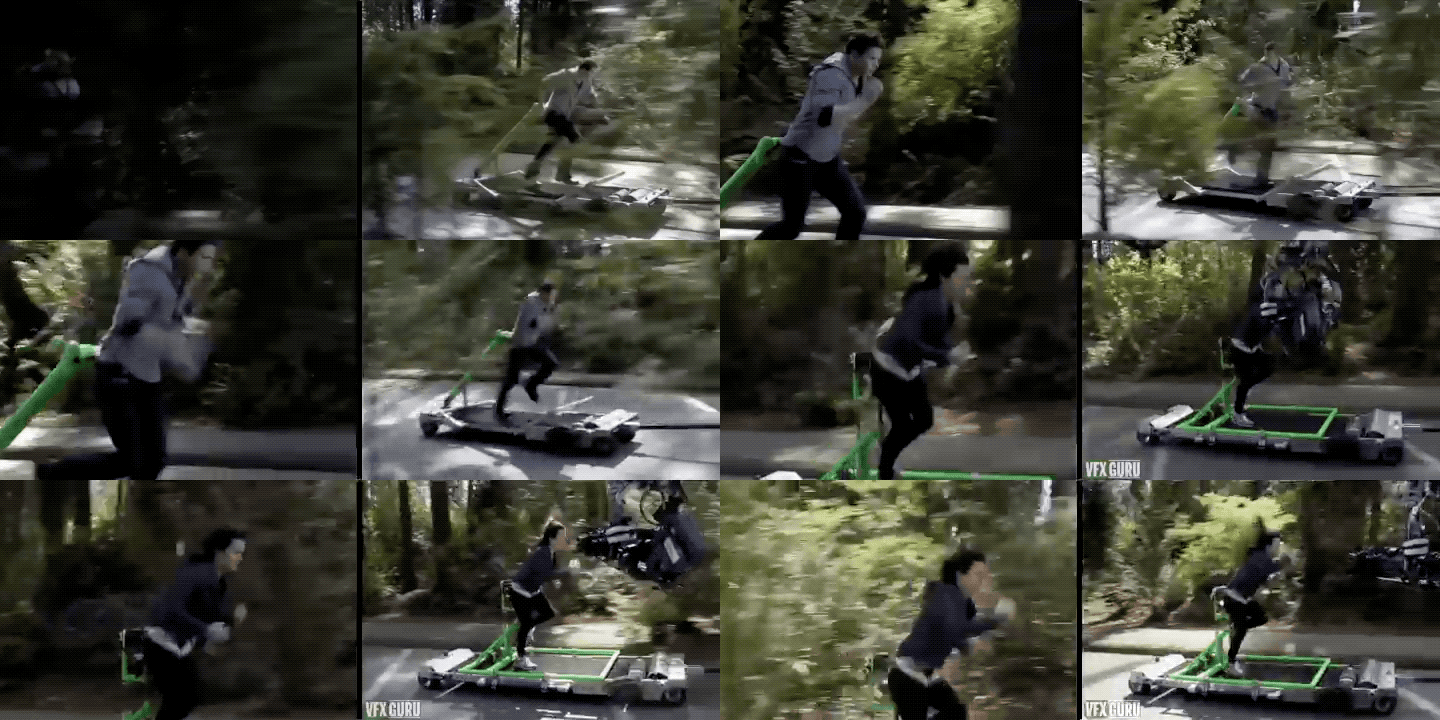
The truth is that the camera operator and his crew do this for us, using various techniques. I’ll take a look at three classic examples.
Choosing Life at Full Speed.
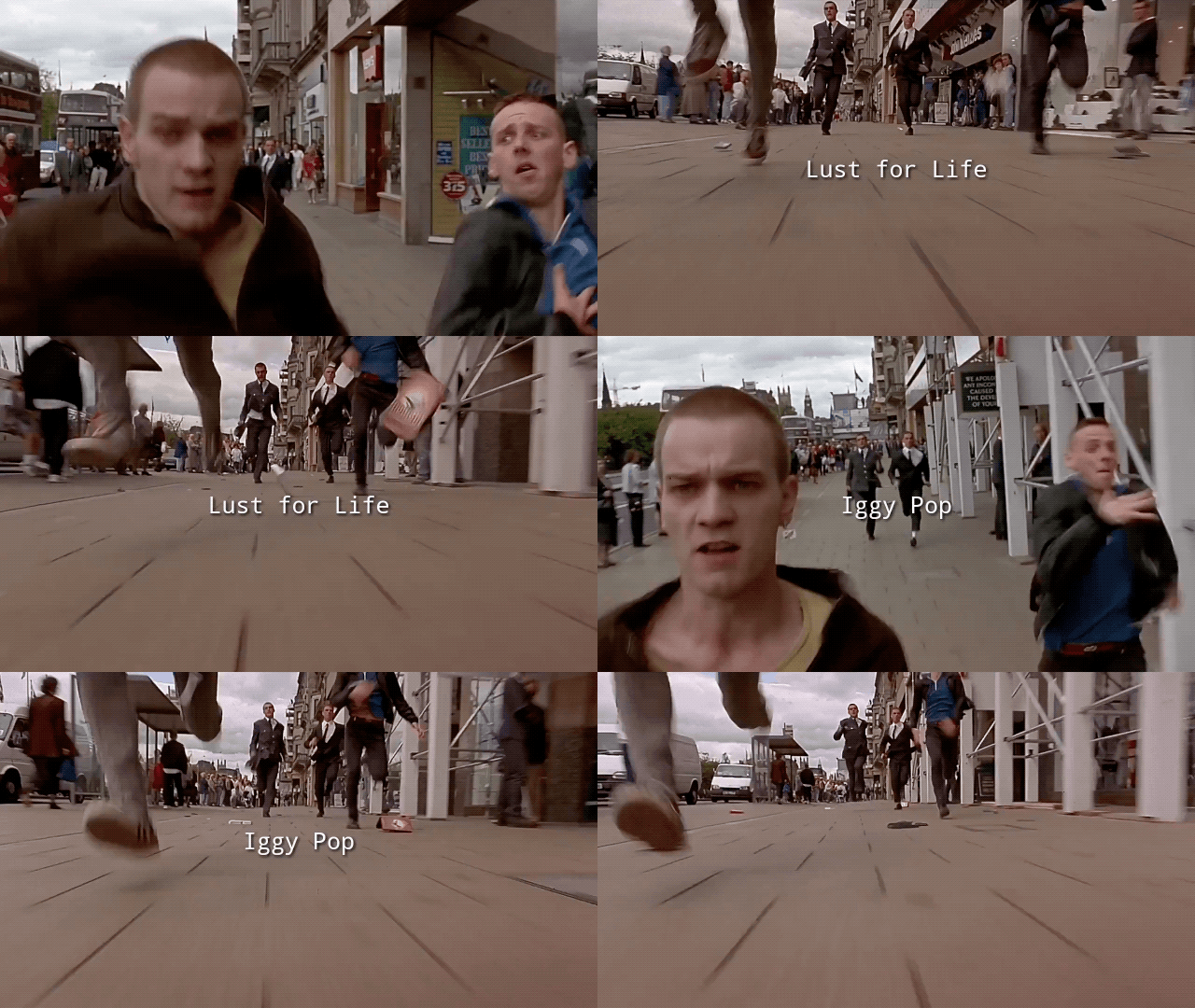
Trainspotting was released in 1996, and its opening scene exploded onto our screens, with that narration “choose life” and the excellent track Iggy Pop’s Lust For Life.
That classic monologue, spoken by the main character Mark Renton, with its “choose life” concept, will remain an emblem for those who don’t want to conform to the norm.
In the scene, Renton and Spud run madly down the street, away from the cops, after being caught stealing. The camera moves backwards on the same axis. A handheld camera with a medium shot pulls the audience into the movie’s action from the first second of the film.
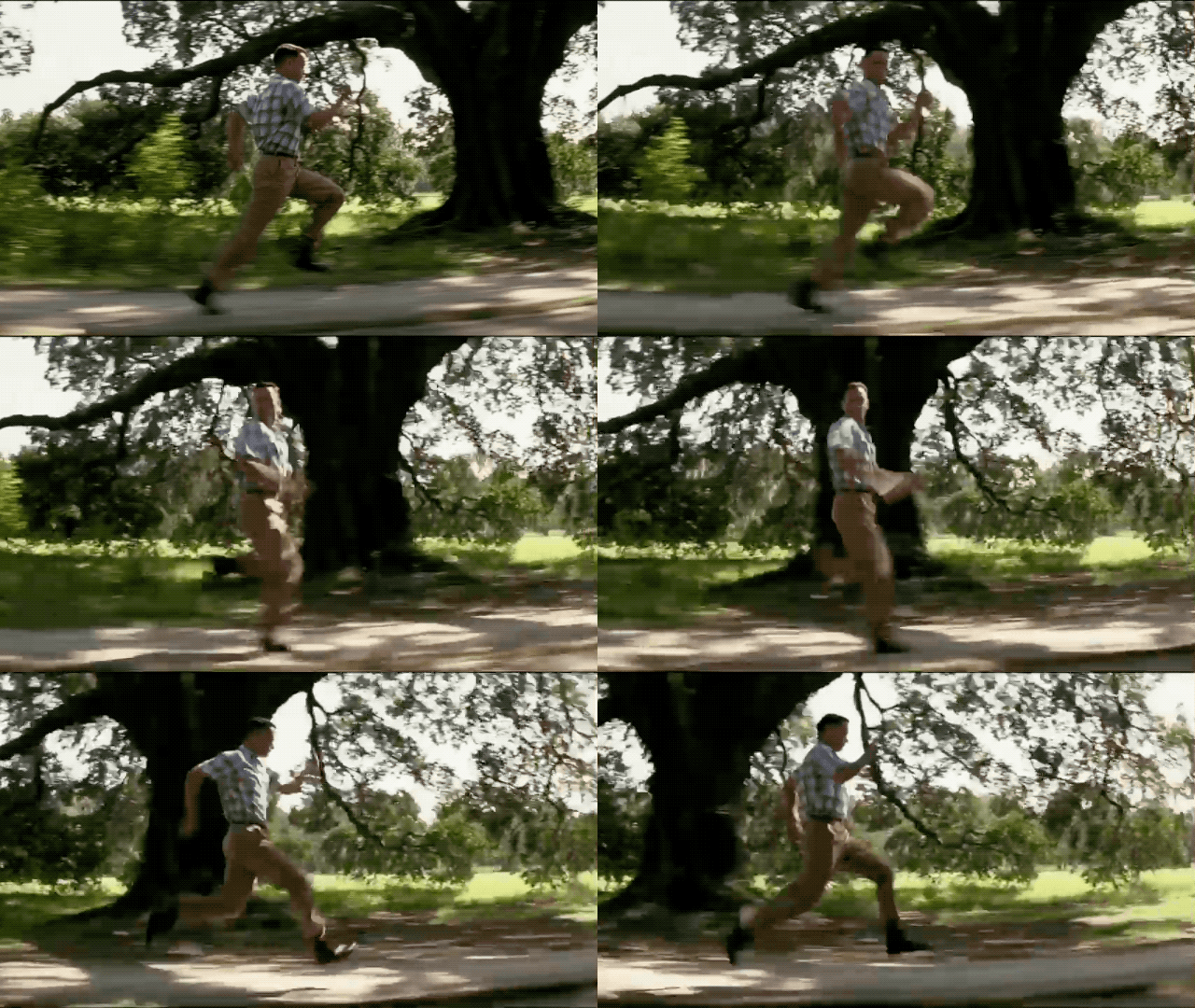
Running for No Particular Reason,
Forrest Gump features Tom Hanks’ epic jog across the breadth of the United States. It is bonkers, as “for no particular reason,” he sets off on a run that ends up crossing the continent and growing a very long beard along the way. Cool! Forrest says he ran 3 years, 2 months, 14 days, and 16 hours, just like that, and this little jog takes 6 minutes in the movie.
We see many shots: wide, medium, and close, from the different axes of the camera’s view and perspective. But how are such scenes created?
Distance shots can be easily taken from a tripod, camera dolly, or a car with a camera rig. But when I want to participate in the run and record emotions, the camera must be very close and move together. So, the Steadicam is the primary tool for stabilising camera shots and following the characters in such dynamic scenes.
Scenes of this type add an extraordinary emotional charge and dynamics to movies. Sometimes it is a turning point in the film's action.
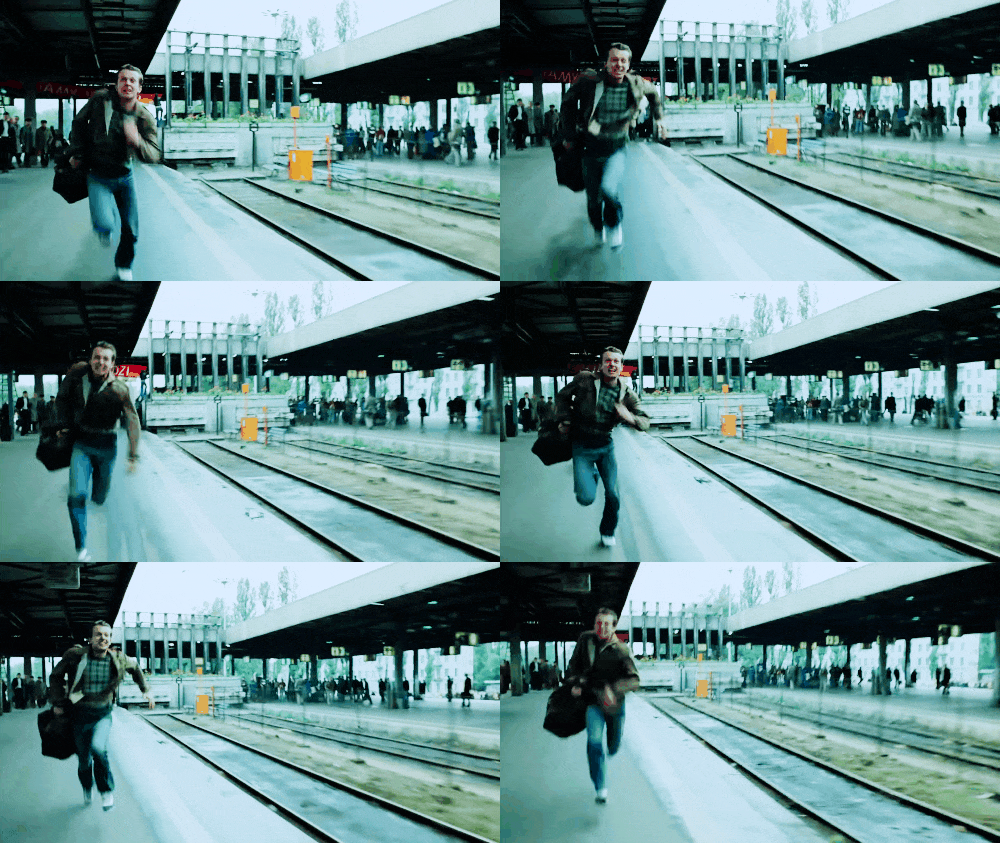
The last example of a running shot is Blind Chance (1981) by Krzysztof Kieślowski, a compelling drama about the difficulty of reconciling political ideals with personal happiness.
Run! Run Toward Fate.
Blind Chance consists of three stories or potential biographies of the same person – Witek Długosz. The starting point for each of them is the same scene – just before the train leaves for Warsaw, the main character runs to the station and tries to catch the train while running. This moment changes his life, and the film then explores this impact on his fate.
I hope this simple explanation is useful to you.
————
Irek Szandała, Head Cinematographer at Abarel Agency, looks into the history and some of the coolest running scenes in modern film.
My recommendation: